
New Dawn for Nigerian Skies

Strategic Investments Herald an Era of Enhanced Safety Under Engr. Farouk Umar Ahmed
In the complex, high-stakes ecosystem of aviation, trust is the most critical currency. It is the foundation upon which safety is built, efficiency is achieved, and a nation’s economic connectivity is secured. For the Nigeria Airspace Management Agency (NAMA), a season of unprecedented trust is unfolding, marked by a series of landmark approvals from the highest echelons of the Federal Government. At the centre of this transformative period is Engr. Farouk Umar Ahmed, the Managing Director of NAMA, whose technocratic leadership and internal reforms have positioned the agency as a worthy beneficiary of this strategic federal endorsement.
The recent wave of approvals from the Federal Executive Council (FEC), championed by the Minister of Aviation and Aerospace Development, Barrister Festus Keyamo, represents more than just budgetary allocations; it is a powerful vote of confidence in Engr. Farouk’s stewardship and a deliberate strategy to catapult Nigeria’s airspace infrastructure into the 21st century.
The Federal Seal of Approval: A Strategic Infusion
The approvals read like a strategic blueprint for modernizing Nigerian airspace. They are targeted, critical, and address long-standing gaps in the nation’s aviation infrastructure. This concerted push signals a government not merely maintaining the status quo, but actively investing in the future.
Key among these approvals are:
• Procurement for Aeronautical Information Management (AIM) Systems: This deal ensures the technical upkeep and support for the AIM systems at Nigeria’s five primary international gateways—Abuja, Lagos, Kano, Port Harcourt, and Enugu. These systems are the nerve centre for aeronautical information, vital for flight planning, navigation, and overall airspace management. This investment guarantees the integrity and reliability of the data upon which every flight in Nigerian airspace depends.
• Nationwide Rollout of TETRA and VHF Infrastructure: The council’s authorization for cutting-edge Terrestrial Trunked Radio (TETRA) energy infrastructure and 14 new VHF remote communication units is a game-changer for communication reliability. TETRA provides secure, instant, and robust communication for ground operations and emergency services, while the new VHF units will dramatically enhance the clarity and coverage of air-to-ground communication, a critical component of aviation safety that Engr. Farouk had personally prioritized upon his assumption of office.
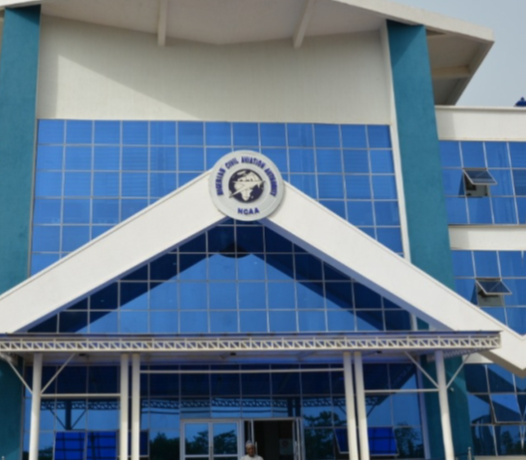
• A Custom-Designed Headquarters: Perhaps one of the most symbolic approvals was for NAMA to finally occupy its own custom-designed headquarters in Abuja. Minister Keyamo’s disclosure, citing the hazards of housing sensitive command centres in leased commercial properties, underscores a strategic shift towards sovereignty, security, and operational integrity. For an agency tasked with national security, this move is both pragmatic and profound.
• Runway Illumination for 24/7 Operations: The validation of 2024 budget allocations for runway illumination is a direct economic stimulus for the aviation sector. As Minister Keyamo astutely observed, “Certain airports close at 6 p.m. due to absent lights. These enhancements will extend service to 10 or 11 p.m.” This extension of operational hours unlocks new potential for airline scheduling, improves aircraft utilization, and boosts carrier profitability, creating a ripple effect across the entire travel and tourism economy.
The Farouk Factor: Building a Foundation for Trust
While the FEC’s approvals provide the tools, it is Engr. Farouk Umar Ahmed’s leadership that has built the foundation of trust necessary for such significant investment. Described as a unique aviator with a wealth of technical knowledge, Farouk is not an outsider parachuted in; he is an insider who knows the system and, for the past 23 months, has been meticulously recalibrating it.
His strategy has been two-fold: fortify from within, perform for all to see.
Upon his appointment in December 2023, Farouk immediately turned his attention to the agency’s most valuable asset: its people. He tackled long-standing staff welfare issues head-on, addressing unpaid housing arrears, relocation allowances, and stagnated promotions. This focus on welfare was not merely an act of goodwill; it was a strategic masterstroke. By restoring morale and boosting productivity, he stabilized the human engine that drives NAMA’s complex operations. Staff across all departments have widely commended this focus, creating an internal environment of goodwill and commitment that is essential for executing large-scale projects.
Furthermore, as a technical professional, Engr. Farouk declared training a non-negotiable priority. Initiatives like the recent two-week on-the-job training for Air Traffic Safety Electronics Personnel (ATSEPS) across Lagos, Abuja, and Kano demonstrate a commitment to building in-house capacity. This ensures that the new, sophisticated infrastructure being procured will be maintained and operated by a highly skilled workforce, protecting the government’s investment and ensuring long-term sustainability.
On the performance front, Farouk has relentlessly championed a culture of safety and proactive collaboration. The recently activated Search and Rescue Simulation (SARS) exercise at the Nnamdi Azikiwe International Airport, adjudged a resounding success, and the Aircraft Emergency Table Top Exercises are testaments to this. By bringing together agencies like the Nigerian Civil Aviation Authority (NCAA), Federal Airports Authority of Nigeria (FAAN), and the Nigerian Meteorological Agency (NiMET), he has demonstrated NAMA’s role as a collaborative leader, committed to a coordinated and effective response to any airspace-related emergency.
A Symbiotic Vision: Ministerial Supervision and Executive Execution
The current trajectory of NAMA presents a powerful case study in effective governance: a visionary supervisor in Barrister Festus Keyamo providing the political will and strategic direction, and a competent executor in Engr. Farouk Umar Ahmed delivering operational excellence and institutional readiness.
The FEC’s approvals did not materialize in a vacuum. They are the result of a compelling case made by the ministry and the agency, a case built on a demonstrable record of improved financial discipline, clear strategic planning, and a proven commitment to safety under Engr. Farouk’s watch. The government is investing not just in infrastructure, but in a leadership team it trusts to deliver.
The new headquarters symbolizes this perfectly. It moves NAMA from a tenant to an owner, from a temporary occupant to a permanent, commanding presence. It reflects the journey of the agency itself under this administration—moving towards greater self-reliance, security, and operational command.
Cleared for Take-Off
The landscape of Nigerian aviation is on the cusp of a significant transformation. The runways are being lit for longer hours, the communication lines are becoming more robust and secure, and the very command centre of the nation’s airspace management is being fortified.
Through careful planning, people-centric leadership, and an unwavering focus on safety, Engr. Farouk Umar Ahmed has steered NAMA to a position of credibility and performance. The overwhelming vote of confidence from the Federal Executive Council, under the guidance of Barrister Festus Keyamo, is the catalyst that will accelerate this progress.
For the travelling public, for airline operators, and for the nation’s economic future, the message is clear: Nigerian skies are open for business, safer, more efficient, and backed by a government and agency leadership that is aligned in its commitment to excellence. The pieces are in place, the trust has been earned, and Nigerian aviation is, truly, cleared for take-off into a new era.