
A Czar’s New War on Unruly Behaviour

There is hardly anything new about unruly behaviour in aviation, perhaps the most global of industries. And there are globally recommended standards and established rules to curb it. But when there is a surge in a consenting nation, as currently being witnessed in Nigeria, a creative approach that considers certain local peculiarities might be needed.
The Nigeria Civil Aviation Authority, NCAA, recognises this and has been tackling the problem head on in a number of ways. The Authority has brought together top aviation stakeholders at an event tagged: National Civil Aviation Security Committee Meeting in Abuja. Critical issues centred on unruly behaviour were discussed. The event was an indication that the Authority is beginning to view unruly behaviour from the serious prism of national security.
In his presentation, President, Aircraft Owners and Pilots Association of Nigeria President, Dr. Alexander Nwuba, called for a unified approach to tackle this growing problem, ways. The Authority has brought together top aviation stakeholders at an event tagged: National Civil Aviation Security Committee Meeting in Abuja. Critical issues centred on unruly behaviour were discussed. The event was an indication that the Authority is beginning to view unruly behaviour from the serious prism of national security.
In his presentation, President, Aircraft Owners and Pilots Association of Nigeria President, Dr. Alexander Nwuba, called for a unified approach to tackle this growing problem, emphasizing that it is no longer just about isolated incidents but a systemic issue that requires a collaborative solution across the entire aviation sector. He advocated a more proactive approach, advocating for ground staff to identify and report issues during the boarding process. After all, he reminded us, “airplanes can’t park in the air.” This is why ICAO regulations aim to address potential conflicts before the plane even leaves the gate.
In its further drive to curb unruly behaviour, the NCAA has looked beyond meetings and resolutions; it took the campaign directly to the travel public. NCAA Consumer Protection staff recently “stormed” terminal buildings to engage with travellers, handing out publicity materials and answering questions.
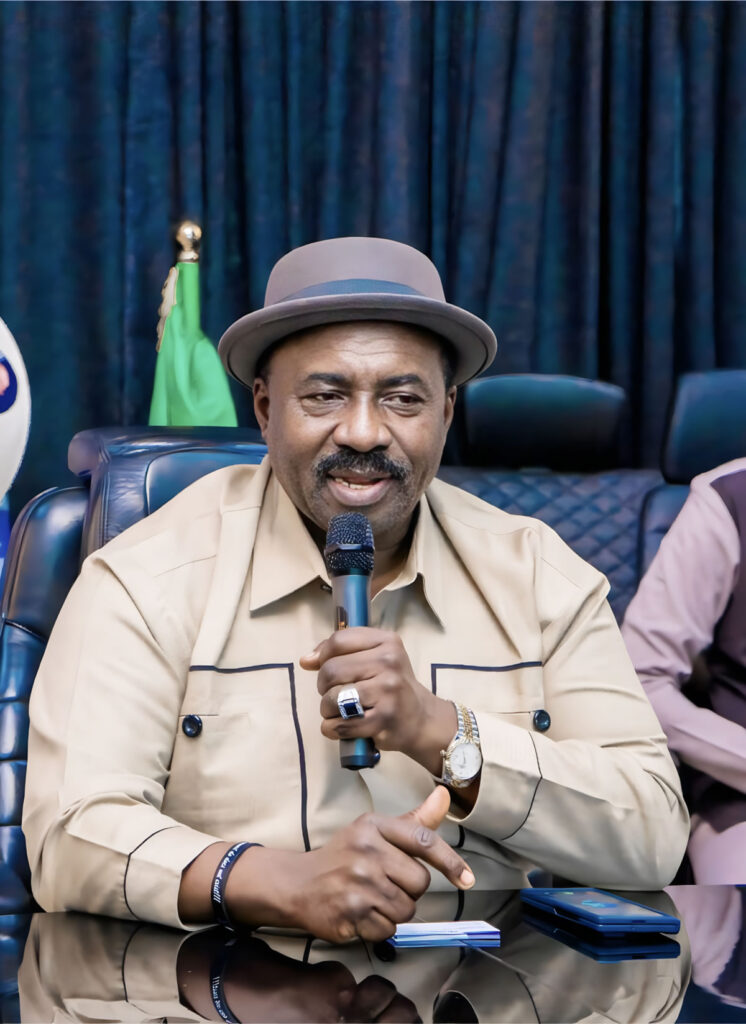
But perhaps the most remarkable NCAA moves to contain the surge in unruly behaviour has come from Mike Achimugu. Officially, he is the Authority’s Director of Consumer Protection (DCPC) and the nation’s consumer protection czar. His effective use of the social media and deployment of targeted, sleek publications has resonated with the industry. He seizes every opportunity and platform to educate and enlighten the travel public. Achimugu has been mostly measured and mature in his approach but has sometimes been known to be ferocious depending on the circumstances, particularly when engaging ignorant, deliberately misleading and manipulative contents. He uses his relevant travel experiences and related examples as a peg to hang his advocacy. While stressing the global nature of the industry, he stresses the fact that both the service providers and users have a shared responsibility: for airlines and other operators, provide top class services; for passengers, be in your best behaviour at all times during flight. If in doubt, reach out to NCAACPD.
ON X, Achimugu’s handle is @mikeachimugu01 His posts have ranged from the educative and the advisory to the explanatory. But they all come across as helpful. Among the recent notable ones:
“May I remind again: Be mindful of the air ticket you purchase. If you buy a non-refundable ticket, securing a refund may be tricky, if not impossible. Always tell your travel agents the kind of tickets you want. Read the terms and conditions of the ticket.”
“Whenever you begin to do the right thing, the pushback is always huge. And from those who would benefit the most if things begin to work well. Everybody is an expert in ALL fields these days. Sigh.”
“Nigeria has about Thirty-One (31) airports (26 domestic airports and 5 international airports); 92 airstrips and 131 heliports; 13 Scheduled Commercial Air Transport Operators, 23 Non-scheduled Commercial Air Transport Operators; 2 Cargo Commercial Air Transport Operators; 554 licensed pilots; 913 licensed engineers and 1700 cabin personnel. Nigeria, being Africa’s most populous country, is an important destination for over 22 foreign carriers. Nigeria currently has Bilateral Air Services Agreements with over 78 countries.”
“There was an initial delay with the operating aircraft in the morning due to technical. That is force majeure. That delay had a knock-on effect on all other routes serviced by that aircraft, and was the reason for rescheduling the flight from 15:30 to 17:50. ……
I apologize to all affected passengers. It is always frustrating to have plans delayed/cancelled due to flight disruptions. More aircraft are coming into Nigeria due to the Honourable Minister’s intervention, and most airlines would have rescue aircraft for situations like this very soon.”
img
With well over US $2.5 billion contribution to its Gross Domestic Product (GDP), according to IATA and World Bank data, Nigeria’s air transport sector is adjudged one of the largest and fastest growing in Africa.
While the numbers are quite impressive, the challenge has always been sustaining them. Sustainability is no mean task: nearly 300,000 jobs must be retained, airlines with expanding fleets and route networks must keep flying, and support infrastructure must be provided and renewed across Nigeria’s vast aviation terrain.
But above all else, the 16 million passengers, according to available figures, who use Nigeria’s aviation system yearly, must fly in absolute safety and comfort.
On all scores, do not envy the Nigeria Civil Aviation Authority. It is its statutory responsibility to uphold the standards and rules, all of which are globally recommended, in such a way that the gains of the growth and the stringent, dynamic demands of the passengers are sustained. The Authority is not expected to regulate the airlines and sector out of existence.
It is indeed a very delicate balancing act.
While ARRIVAL is not in a haste to judge, it is fair to state that its DG, Captain Chris Najomo has navigated that sometimes cloudy sky quite admirably. Perhaps the most recent unspoken endorsement of the NCAA came in October when Nigeria was re-elected as a Part II member of the International Civil Aviation Organization (ICAO) Council. This came on the heel of Nigeria’s successive leadership roles in the august body over the years.
It seems Nigeria’s reelection into that position and subsequent enhancement of its status has conferred some bragging right on Capt. Najomo. He said:
“This achievement is not just symbolic; it is a testament to Nigeria’s regulatory prowess, technical competence, and unwavering commitment to global aviation standards. It affirms that our voice matters in shaping the future of international civil aviation, and that our contributions, rooted in safety, sustainability, and sovereignty, are recognized on the global stage.”
This may be part of the cheery news that the industry and stakeholders expect but has not lifted a gram of the burden off Captain Najomo’s shoulders. Back home, all eyes are on him to see if he is indeed steadying the flight and staying the course. Is he balancing rigorous regulation with proactive support for airlines, and in the end, emerging as a fair umpire?
In civil aviation, the answers can sometimes be simple, complex or general in nature. For example, when NCAA’s regulatory framework creates “conducive environment” for operators, all airlines have a good chance to thrive.
When NCAA successfully guides the negotiation of air service deals with other countries, it creates opportunities and market access for Nigerian airlines. This keeps airlines in business and boosts the economy. The finest example is the Authority’s role in Air Peace’s access to Gatwick and now Heathrow. Ibom Air is re-fleeting and sustaining its network on the West Coast.
Liberalising the sector and backing the essential global legal framework create an enabling environment for airlines to operate. Take Air Peace’s recent dry lease of Boeing 737-000 equipment. This was made possible after Festus Keyamo signed a sovereign guarantee, technically, the Irrevocable Deregistration and Export Authorisation (IDERA). The optics of the Minister and Captain Najomo standing shoulder to shoulder with Air Peace chairman Mr. Allen Onyema and the aircraft in the backdrop were quite telling. IDERA has been widely praised as a turning point in Nigeria’s air transport: NCAA supporting Air Peace, indisputably the largest operator in Nigeria and one of the largest in Africa. The Authority stands side by side with Air Peace yet it must keep its sharp regulatory eyes peeled on it because of the carrier’s size, reach and the nation’s image at stake.
Perhaps when Onyema gushed about the significance of the deal, he was also speaking for other operators:
“The Federal Government of Nigeria guaranteed this business of today. That’s why I am very grateful to Mr. President. Air Peace will not disappoint. We are carrying on our shoulders the vision and aspirations of this country. If we fail, it will be a disgrace to this nation. That is why I call on the legislature, the executive arm, and all Nigerians to support this airline. Because when we succeed, others will succeed. If we fail in this endeavour, it will take another 30 years before any lessor will cross this country, wet or dry leased. But we will never fail.”
Thankfully, both Barr Keyamo and Capt. Najomo, and, by implication President Tinubu, were within an earshot, all listening, all taking notes. This can only mean one thing for the sector: growth, stability, sustainability.